
How To Set Communication Goals For Children With Autism
- breynolds430
- May 7
- 5 min read
Quick Summary
Communication goals for autism focus on helping children express their needs, emotions, preferences, and ideas in ways that others can understand. Effective goals are individualized, measurable, and relevant to daily life. They may involve spoken language, gestures, sign language, visual supports, or communication devices. Early intervention, family involvement, and consistent practice across environments help children build stronger communication abilities and participate more confidently in everyday interactions.
Communication is far more than spoken words. For many children on the autism spectrum, expressing needs, sharing feelings, making choices, and interacting with others can present unique challenges. Thoughtful communication goals for autism help children develop practical skills that make everyday life more manageable and rewarding.
Rather than focusing solely on speech, effective goals address how a child communicates across different environments and situations. When communication objectives align with a child's individual strengths and needs, families and professionals can create opportunities that encourage meaningful progress, stronger relationships, and greater independence over time.
Why Communication Goals Matter for Children With Autism
Communication challenges often affect more than conversations. They can influence social relationships, learning experiences, daily routines, and emotional regulation.
Many children with autism know what they want to communicate but struggle to express it effectively. When communication barriers exist, frustration may increase, leading to behaviors that others misunderstand.
It is important to remember that behavior often communicates a message. A child who refuses an activity, throws an object, or becomes upset may be attempting to express discomfort, confusion, or a preference.
Well-designed communication goals help children develop alternative ways to express those needs clearly and successfully.
What Makes a Communication Goal Functional?
Functional communication focuses on skills that children can use in real-life situations.
Rather than targeting isolated language tasks, functional goals help children communicate during everyday experiences. The objective is to improve a child's ability to interact meaningfully with family members, caregivers, teachers, and peers.
Examples of functional communication include:
Requesting preferred items
Asking for help
Expressing emotions
Making choices
Responding to questions
Following directions
Greeting others
Participating in conversations
When communication goals relate directly to daily life, children have more opportunities to practice and use those skills naturally.
Starting With Your Child's Individual Needs
Every child develops communication skills differently. As a result, goals should never follow a one-size-fits-all approach.
A comprehensive evaluation by qualified professionals helps identify current strengths, challenges, interests, and preferred communication methods. Some children communicate through speech, while others rely on gestures, sign language, pictures, or communication devices.
Parents play an important role in this process because they observe how their child communicates throughout daily routines and activities.
Examples of Communication Goals for Autism
Communication goals should focus on practical outcomes that improve a child's ability to participate in everyday situations.
A young child might work toward requesting favorite toys or snacks independently. Another child may learn to indicate when they need a break or ask for assistance during difficult tasks.
Other examples include:
Responding appropriately to simple questions
Expressing basic feelings
Initiating interactions with family members
Taking turns during conversations
Following two-step directions
Using words or symbols to make choices
Identifying preferred activities
These types of goals help children communicate more effectively while reducing frustration.
Communication Goals for ASD Students in Educational Settings
Communication plays a major role in academic participation and social engagement.
Communication goals for ASD students often focus on skills that improve classroom interactions and learning experiences. These goals may include answering questions, following instructions, participating in group activities, and communicating with peers.
Educational teams frequently collaborate with parents, speech-language pathologists, and other specialists to identify priorities that align with a student's developmental needs.
Successful goals focus on skills that children can use throughout the school day rather than limiting communication practice to therapy sessions alone.
Supporting Nonverbal and Minimally Verbal Children
Not every child communicates through spoken language. Functional communication remains possible through many alternative methods.
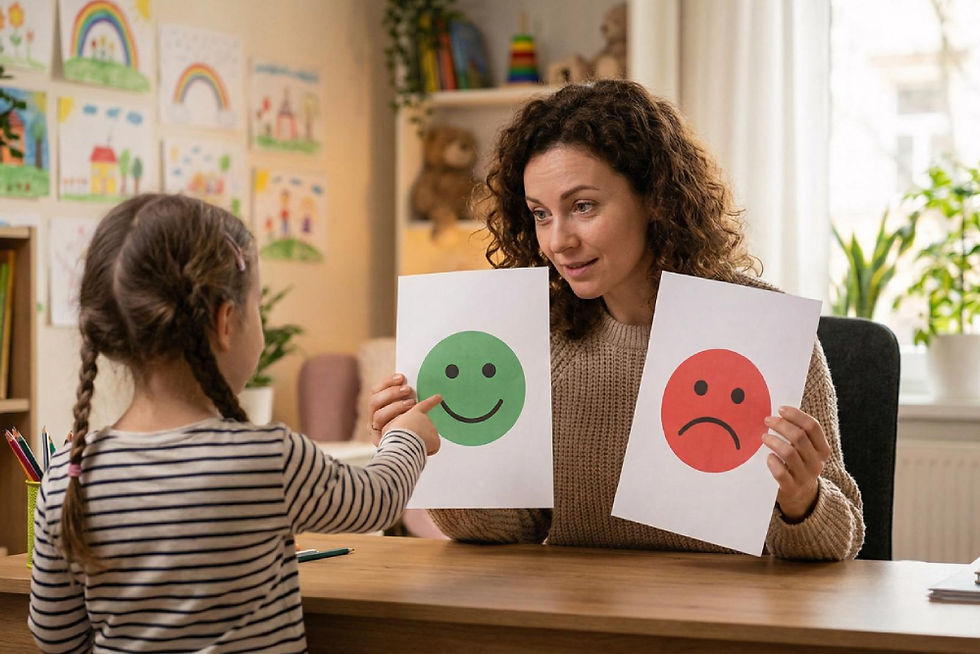
Some children benefit from picture exchange systems, communication boards, sign language, or speech-generating devices. Others may use gestures, pointing, facial expressions, or visual support to communicate.
The goal is not to force a specific communication method. Instead, it is to help children express themselves in ways that work best for them.
When children can communicate their wants, needs, and feelings successfully, daily interactions often become more positive and productive.
The Role of Speech Therapy in Communication Development
Speech therapy can help children strengthen a wide range of communication skills.
A speech-language pathologist evaluates how a child understands and uses communication before developing individualized strategies. Therapy may focus on expressive language, receptive language, social communication, conversation skills, or alternative communication systems.
Sessions often incorporate play, daily routines, and child-centered activities that encourage communication in meaningful contexts.
Parents frequently learn techniques that can be used at home, creating additional opportunities for practice throughout the day.
Communication Skills for Preschoolers With Autism
The preschool years offer many opportunities to develop communication abilities.
Communication skills for preschoolers often include learning to request items, answer questions, identify emotions, engage in simple conversations, and participate in play with others.
Parents can encourage communication growth by talking during daily routines, reading together, singing songs, and creating opportunities for turn-taking.
Children learn best when communication feels purposeful and connected to real experiences. Small interactions throughout the day often create meaningful learning opportunities.
Creating Consistency Across Environments
Communication skills develop most effectively when children practice them across different settings.
Families, therapists, caregivers, and educators should work together to encourage the same communication strategies throughout the child's day. Consistent expectations help children understand when and how to use their communication skills.
Daily routines such as meals, playtime, community outings, and family activities create valuable opportunities for practice.
When communication goals become part of everyday life, children often experience greater success applying those skills independently.
Help Your Child Build Stronger Communication Skills
If your child struggles to express needs, interact with others, or participate confidently in daily activities, early guidance can make a meaningful difference.
Contact Innovative Interventions to learn how our experienced therapists and personalized speech & language services can help your child build functional communication skills that encourage greater independence and connection.
FAQs
What are communication goals for autism?
Communication goals for autism are individualized objectives that help children express needs, emotions, preferences, and ideas more effectively through speech, gestures, visual supports, or other communication methods.
How are communication goals for ASD students developed?
Communication goals for ASD students are typically developed through evaluations, parent input, professional recommendations, and observations of how the child communicates in everyday situations.
Can nonverbal children have functional communication goals?
Yes. Nonverbal children can develop functional communication skills through sign language, picture systems, communication devices, gestures, and other alternative communication methods.
Comments